Top 5 Rockfish Species You’ll Catch in Oregon
Sebastes genus is found in the rocky reefs and deep pinnacles on the Oregon coast. These rockfish form the basis of the Pacific Northwest marine system and are the main target of the local fishermen. Currently, with the 2026 season, the rules now focus on precision management and sustainable harvest. That practice maintains these slowly increasing species in large numbers to benefit future generations as well as sustaining coastal economies. Being aware of what you will catch is the premier to becoming responsible and a successful angler in these cool and productive waters.
Navigating the 2026 Oregon Recreational Rockfish Regulations
Oregon Department of fish and wildlife has established a 4 fish general marine bag limit that is set to be constant in 2026. The regulation gives more preference to longer season rather than daily quotas to prevent emergency closures in the middle of a season that occurred in the past. The anglers now require a nine-dollar Ocean Endorsement to hunt marine finfish using boats, beaches, or jetties. That fee covers a necessary biomass monitoring and research funding fisheries to remain open.
Anglers are required to participate in these new fiscal and biological models in order to be successful. The 2026 regulations establish a new normal whereby the fishermen and fisherwomen are harvesters and stewards at the same time. Recreational fishers make contributions to fund research to avoid the overly conservative federal cuts by paying the Ocean Endorsement. Such collaboration between the state and the people makes nearshore reefs healthy. Having known the rules, now we shall consider the fish that characterize the Oregon experience.
Identifying the Black Rockfish as the Primary Target
The Black Rockfish is the most used and numerous species of the Oregon recreational fishery. It is dark gray or black in body with an enormous mouth which opens beyond the eye and has small dots on its dorsal fin which distinguishes it among its near relatives. These are predatory species and tend to school around rocky features and kelp forests. They are able to dictate the length of the season due to the fact that they determine the marine bag limit in general.
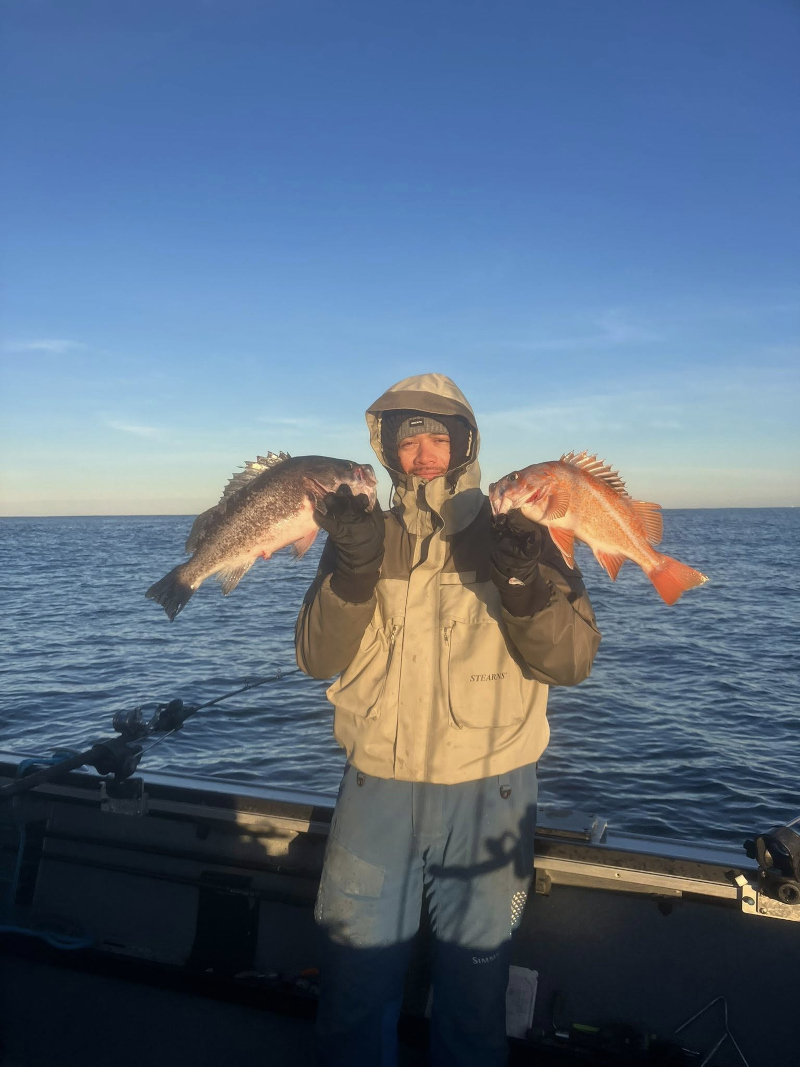
In 2024, close to 240,000 Black Rockfish were caught in Oregon coast by the anglers. Their biomass is still healthy (45 per cent of the unfish levels), and thus managers are attentive enough to prevent overfishing. The fish provides a robust, white fillet that is popular in sea fish and chips. They are normally accessible by boat and shore, and are found in the shallower water by the angler. They give the ideal background of the introduction of reef diversity, although you are yet to see more cryptic species.
Distinguishing the Deacon Rockfish from its Look-Alikes
The Deacon Rockfish was described in the year 2015. It is a common misleader of the fishers, as it looks like the Blue Rockfish, and the Black Rockfish. Recognize it by its dark gray but solid color and sticking out lower jaw a recognizable underbite. This is what makes it different when compared to the even jaws of the Blue Rockfish. Deacons do not have the dorsal spots which are on the Black Rockfish and their mouth is smaller. Such minor variations are vital towards proper reporting and adherence to species-specific sub-bag limits.
Deacon Rockfish are known to school around deep-water pinnacles and reefs on the off shore. They are typical catches on the long-leader type of expedition when equipment maintains hooks at least thirty feet off the bottom. It is a technique that focuses on the healthy and untouched mid-water stocks, but leaves the species that dwell on the bottom untouched. Deacon Rockfish are fine table food and they add a lot of value to the yearly crop. The underbite is spotted and this saves your time and regulatory trouble on the water. Orange species are a different challenge after grey toned fish.
The Recovery and Identification of the Canary Rockfish
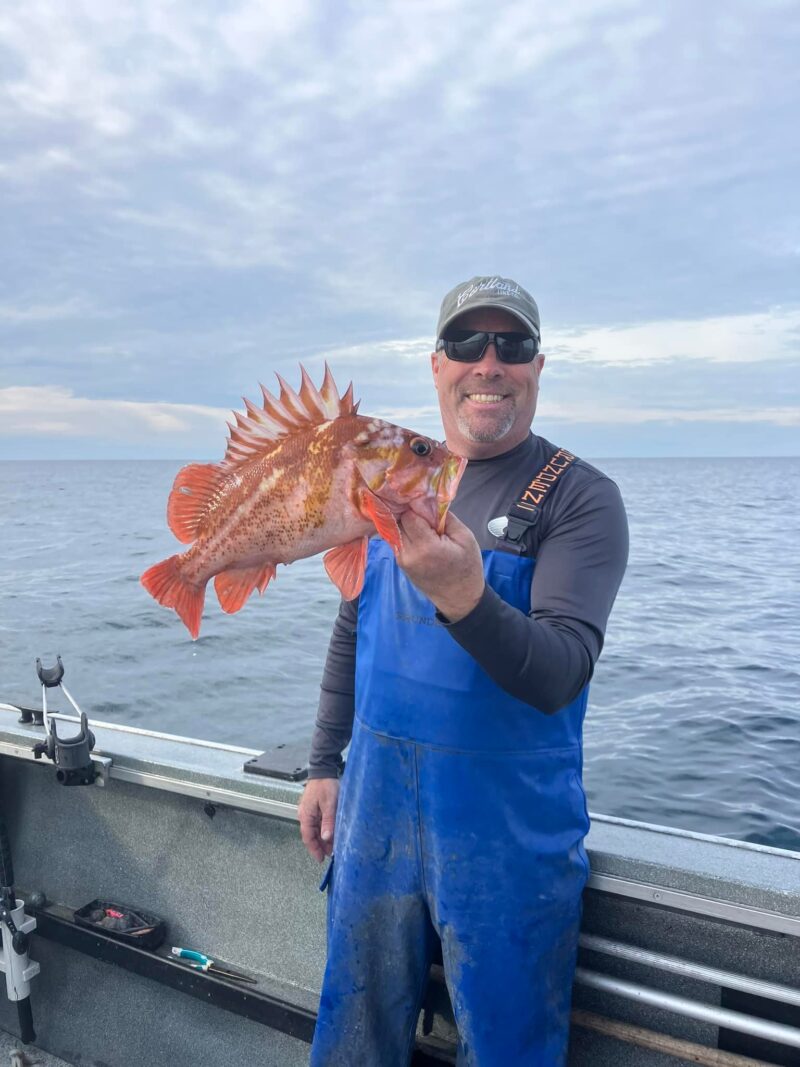
Canary Rockfish is a success story of West Coast. It was overfished previously and returned to precautionary zone following 2023 stock evaluations. It is easily identified by a bright orange or yellow body and three stripes on the head, which are definitely orange, and a well-defined white mark along the lateral line on either side, a sure field mark. Although it is allowed by the general marine bag limit, there are usually certain sub-bag limits; check before going.
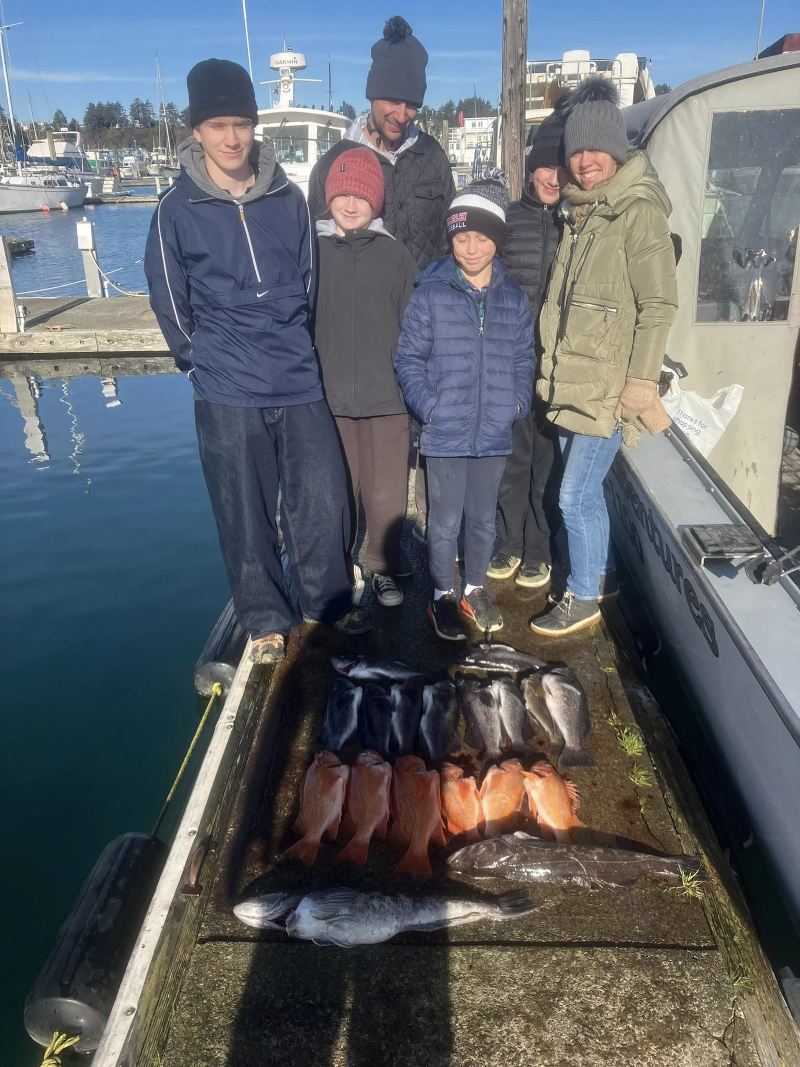
Due to its status, the managers have reduced the number of fish that can be caught annually so as to maintain the population constant. Canary Rockfish tends to fish on the deeper waters and attack together with Yelloweye Rockfish. The two are closely similar and therefore the white lateral line must be checked to avoid the trap of Yelloweye that would be prohibited. Accurate identification allows you to have this tasty bright orange fish with no fear.
Recognizing the Yellowtail Rockfish in the Long-Leader Fishery
The Mid-water Rockfish Yellowtails school. It is brown or olive green in it with a yellow colored tail. The long-leader fishery above the 40-fathom line is directed mainly at this species. The fishery takes a maximum of less than five-inch lures and does not allow natural bait to avoid bycatch. This type of schooling will enable the anglers of Yellowtails to reach the ten-fish mark in the shortest time possible.
The Yellowtail has an economic significance to the economic wellbeing of ports such as Garibaldi and Newport. It provides an alternative of nearshore reefs with offshore ones to reduce the pressure on Black Rockfish stocks. The diversification of the effort is used to sustain the fishing opportunities in Oregon all year-round. These are soft-bodied fish and flaky in nature, and therefore can be used in a variety of cooking. As you go further out in search of yellow-finned beauties be on the watch of the safest fish in the sea.
Avoiding the Prohibited Yelloweye Rockfish at All Depths
The most endangered conservation species in the Oregon coast is the Yelloweye Rockfish. In all waters, retention is absolutely forbidden. Look at it by its rich orange or red body, its bright yellow eyes, and by two coarse ridges on the top of the head–glovable. They may live up to a hundred years and become enormous, and are therefore highly susceptible to low fishing pressure. Should you become entangled in one, get rid of it at once by the means of a compulsory tumbling machine.
Most of the bottomfishing is dependent on the recovery of the Yelloweye. Whenbycatch is greater than federal regulations, entire coastlines areas can become closed to fishing. Wearing the proper equipment and descending devices is not only a mandate, but it is a requirement as far as sport sustainability is concerned. Surveys indicate that more than 80 per cent of such fish can even survive barotrauma provided they are removed to depth within two-minutes. The preservation of this rebuilding inventory has left the remainder of the rockfish fishery free to all.
Plan Your Next Adventure with a Newport Oregon Fishing Charter
Learning to identify these five species will make your upcoming visit be an experience of a professional grade. The 2026 season presents fantastic chances to those who value the rules and face conservation as an angler. The Oregon coast offers a national fishery, whether one is going after massive Black Rockfish, or is heading offshore to the Yellowtail limit.
The most effective maneuver in these tricky waters so that one can make a successful harvest is by going out in the sea with professionals, who are familiar with reefs. Book your next Newport Oregon Fishing Charter today to experience the thrill of the deep while contributing to the sustainable future of our marine resources.