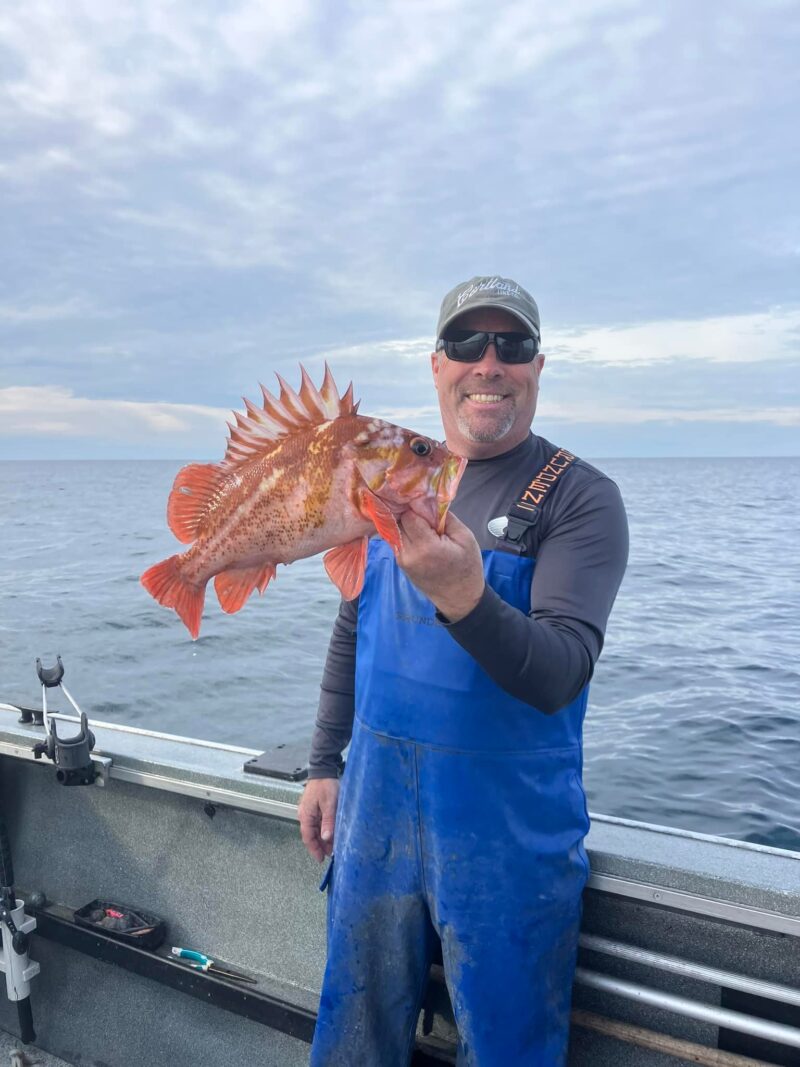
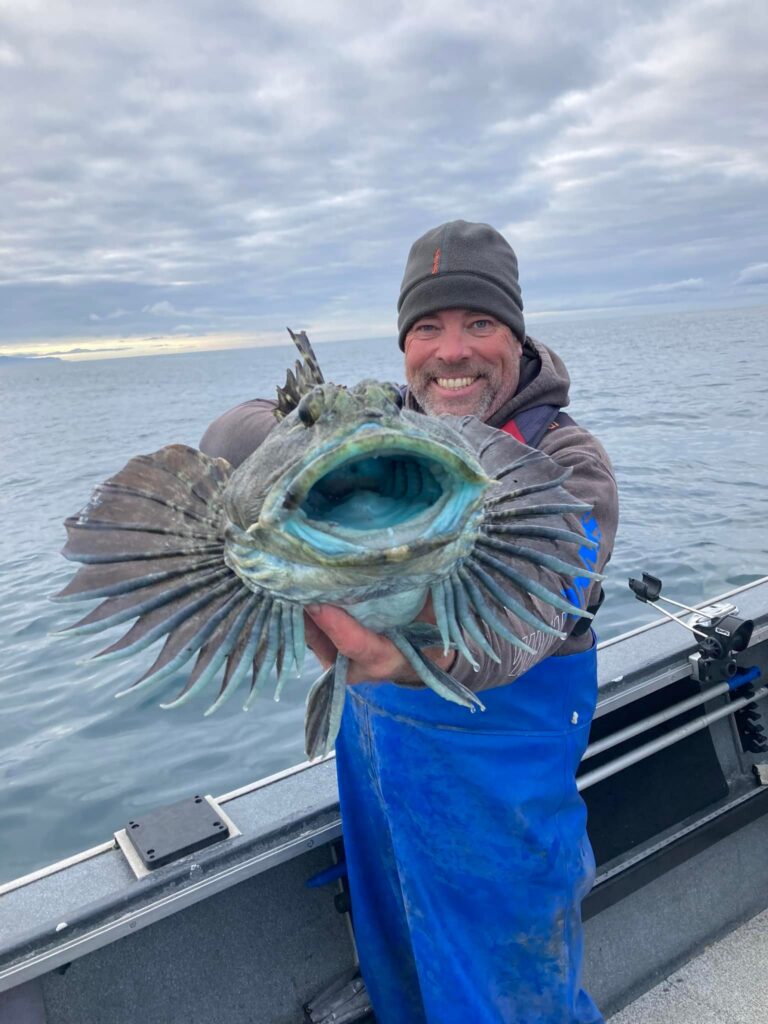
A Guide to Lingcod Fishing: The Dragons of the Deep
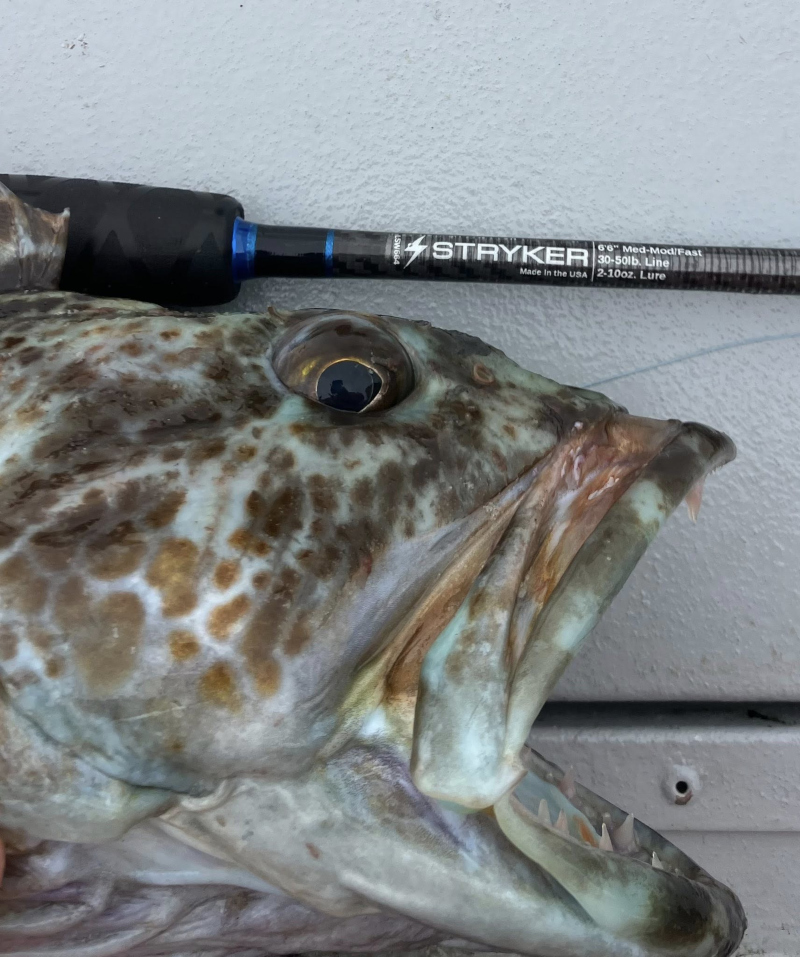
It’s not often that a fish is called a “dragon.” The lingcod does. Thanks to its massive mouth, 18 deadly teeth and a predatory hunting style that is downright brutal, this Pacific predator has long fascinated anglers. Historical accounts reveal that lingcod has been hunted since 6200 BC by coastal Indigenous peoples using spears, nets, and wooden baitfish with bone hooks. To this day it’s considered one of the most sought-after fish from Alaska to Baja California. And, in 2026, bag limits are higher and populations plentiful, making it the perfect year to pursue these seafloor monsters.
Don’t be fooled, the lingcod is not a cod. It’s a member of the greenling family (Hexagrammidae) and is the largest member of its order. They grow up to five feet long and weigh more than 80 pounds. Its scientific name, Ophiodon elongatus, means “elongated snake tooth”, which gives you a clue as to their disposition. So why are they the fish to catch in 2026? Let’s break it down.
The Lingcod Outlook for 2026
Lingcod appear to be in the best possible shape from a conservation standpoint. The latest NOAA stock assessments have found the Northern Pacific and Southern Pacific stocks are “not overfished” and “not subject to overfishing”. A 2025 Canadian assessment of its outside waters in British Columbia affirmed the population is well above its reference points, with essentially no risk of decline during the following decade.
That means fishing opportunity. Oregon has increased the daily bag limit for lingcod from two to three for 2026, due to healthy stocks and minimal bycatch for yelloweye rockfish. Washington still restricts anglers to two fish per person, with no minimum size, in most marine waters. Alaska is most cautious, closing the fishery to protect spawning females and male “nesters”.
There’s one significant change for Oregon anglers. Ocean anglers now need to obtain an Ocean Endorsement for most ocean fishing, starting January 1, 2026. The endorsement is $9 per year, and supports vital ocean surveys. So let’s explore the whereabouts and habits of these fish, with these rules in mind.
How to Locate Lingcod: Distribution and Ecology
Lingcod are homebodies. Tracking studies reveal most remain around the same rock reef for their entire lives, not often straying from their “home reef”. That makes waypoint fishing with a GPS highly productive. If you have success fishing a lingcod from a certain location, take note. Within a month or so, another fish is likely to take its place.
These fish call rocky bottoms with rocks, holes and ledges in 50 to 200 feet of water home. They also tend to stay in areas with high current, bringing prey within reach. The best fish are often found around underwater pinnacles that other fishermen ignore, because there is less fishing pressure. For this reason, technique is critical.
Best Techniques for Catching Lingcod
The basic approach is to drift fish over rocky reefs while jigging near the seafloor. Lingcod don’t respond to “set and drift” techniques. Anglers that catch lingcod jig heavily while drifting, particularly over waypoints. Bait the bottom, lift one to three feet to prevent snags and cast erratic vertical jigs to simulate an injured prey.
As for tackle, use a medium-heavy to heavy action rod (6.5 to 7.5 feet) and a strong conventional reel with 40 to 65 pound braided line. And use a 30-50 pound fluorocarbon leader for protection against abrasions on rocks. You will lose tackle. This is par for the course, so be wary of using very heavy main line as it is more difficult to cut away from snags.
Live bait is very effective. Sand dabs, greenling and live mackerel rigged on a dropper loop one crank off the bottom often result in action within minutes. Artificial baits include large metal jigs, large swimbaits or long (6-9 inch) soft plastic shad imitations. As a result, knowing a bit about your quarry will help your fishing, too.
What’s in a Blue Lingcod?
About 20% of all lingcod have turquoise or blue-green flesh. This striking hue has sparked much discussion in the fishing press and on forums, with some suggesting that the fish have been poisoned by mercury or even radiation. The truth is more prosaic, and more fascinating.
Biliverdin is a bile pigment. It’s the same pigment that gives a bruise its green color. In a 2021 study published in Marine Biology researchers examined more than 2,000 lingcod from across their entire range and found more blue lingcod were females, smaller fish, and those caught in shallower water. The authors suggest that blue fish may be nutritionally stressed or have a different diet, but the cause is still unknown.
The take home message for anglers is this. It is perfectly safe to eat blue lingcod. It cooks white and tastes the same as its white cousins. In fact, many anglers believe it’s lucky to catch a “Smurf cod”. Apart from the colour mystery, there are a few other myths to dispel.
Lingcod Fishing Myths Busted
Another common myth is that lingcod are a strong, feisty fighter. However, they provide an initial strong run back to the rocks, but have little stamina once lifted off the bottom. The key is to keep them from running back into rocks and breaking your rod, not wear yourself out.
A second common misconception is that catch-and-release lingcod suffer the same fate as rockfish. This is false. Lingcod do not possess a swim bladder, and do not experience barotrauma when hauled up from depth. Their survival rate is extremely high, so releasing lingcod voluntarily is a very useful conservation strategy.
Finally, it is commonly believed that you need a boat to catch lingcod. Big lingcod are definitely a boat-only fishery, but smaller lingcod are frequently landed from jetties, piers and rocky coasts with 8 to 10 foot spinning rods. Offshore anglers should look for areas with rocks and flow. But with all of this information, it’s time to get fishing.
Experience Lingcod on the Oregon Coast
The Oregon coast is home to some of the best lingcod habitat on the west coast. The lifting of the daily and annual bag limit to three fish in 2026 and the year-round availability at all depths makes now the perfect time to go after these cannibalistic predators.
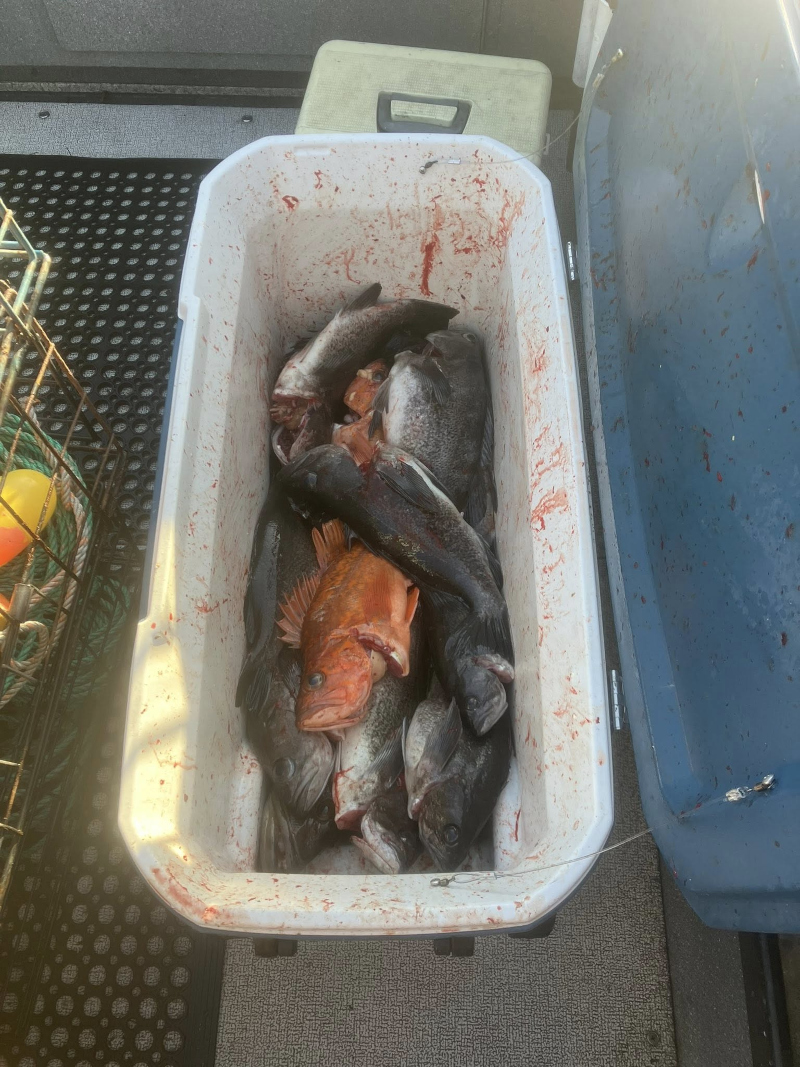
If you are interested in fishing for lingcod, book a fishing charter with one of the knowledgeable Newport Oregon fishing guides that focus on bottom fish. An expert captain gets you on the right structure in the right current at the right time. The dragons are waiting.